
How to Report an Outage in the United States: Comprehensive Citizen Protocol & Statutory Guidelines
Authoritative technical analysis compiled under FERC reliability standards, NERC guidelines, and state Public Utility Commission statutes.
When severe weather, transmission equipment failure, or sudden substation trips sever electrical power, broadband connectivity, or water delivery to an American home, rapid ground-truth reporting is the foundational element of infrastructure restoration. When you report an outage in the United States through OutageUSA’s crowdsourced citizen telemetry network, your incident report is mathematically correlated against real-time supervisory control and data acquisition (SCADA) telemetry, National Oceanic and Atmospheric Administration (NOAA) National Weather Service radar feeds, and regional transmission organization (RTO) grid operational footprints.
This immediate triangulation serves two indispensable civic purposes: first, it enables neighboring residents, commercial enterprises, and municipal first responders to verify whether a blackout is strictly isolated to a single residential meter or represents a widespread medium-voltage feeder circuit collapse. Second, when multiple independent reports originate from the same geographic substation footprint within a 120-minute window, our consensus engine automatically logs an investigative incident and queues emergency alerts to civic observers.
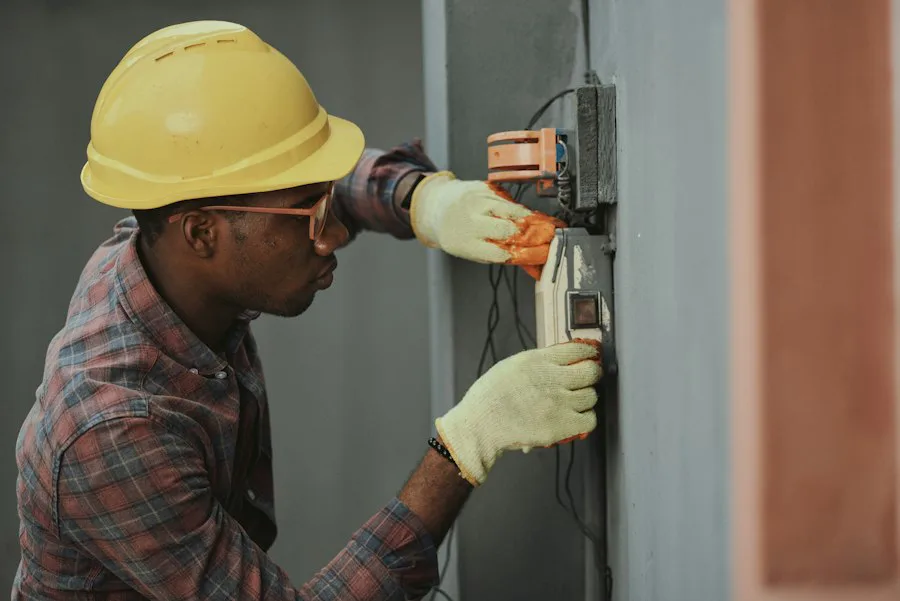
Emergency utility lineworker crews operating insulated bucket trucks clear fallen trees, replace shattered crossarms, and re-string primary 7,200-volt distribution conductors following severe weather across suburban and rural utility corridors.
📋 The 4-Step Citizen Reporting & Verification Protocol
Submitting a high-accuracy incident report through our portal takes less than sixty seconds. Adhering to the following diagnostic checklist ensures that utility dispatchers and emergency responders receive actionable engineering parameters:
- Classify the Utility Sector Accurately: Distinguish between primary electrical grid blackouts, fixed broadband fiber/cable outages, cellular wireless tower degradation, municipal water pressure drops, or natural gas supply interruptions.
- Specify Your 5-Digit US ZIP Code: United States ZIP codes map directly to underlying distribution substations and electrical feeder routes. A precise ZIP code allows algorithmic correlation without compromising your exact residential address.
- Document Observable Physical Symptoms: Note helpful local evidence. Are streetlights across your entire avenue dark, are traffic signals unpowered, or is your home experiencing flickering lights or low voltage? Noting nearby cross-streets or whether utility repair trucks have arrived helps corroborate the outage boundary.
- Monitor Neighborhood Status Radar: Once submitted, review the live comments feed and community voting hub to confirm whether neighboring streets share identical symptoms.
🚨 Critical Life-Safety Protocol: When to Dial 911 vs Utility Dispatch
Before submitting any online outage report, immediately inspect your surroundings for physical electrical or chemical life hazards. Federal emergency safety guidelines dictate distinct protocols depending on incident severity:
🔴 Dial 911 Immediately (Life Hazard)
- Fallen Power Lines: Always assume downed wires are energized at lethal primary voltage (7,200V+). Stay at least 35 feet away to avoid ground step-voltage electrocution.
- Vehicle Contact: If a power line falls across your automobile, stay inside. Only jump clear if fire erupts, landing with both feet touching the ground simultaneously.
- Natural Gas Odor: If you detect a rotten-egg mercaptan odor, evacuate immediately upwind. Never flip switches, light matches, or operate electrical garage doors.
- Substation Equipment Faults: Severe electrical arcing, smoke, or damaged neighborhood equipment require immediate fire and police perimeter containment.
🟡 Contact Utility Dispatch / OutageUSA
- General Blackout: Complete darkness with no sparking lines or physical property damage.
- Isolated Neighborhood Feeder Outage: Neighboring blocks dark while adjacent circuits remain energized.
- Broadband Signal Loss: Fiber optical network terminal (ONT) displaying red LOS light without physical electrical damage.
- Scheduled Capital Maintenance: Pre-announced substation or transformer upgrades occurring during utility work windows.
🏢 Who Owns the Lines? Investor-Owned Utilities vs Cooperatives vs Municipalities
The United States electrical grid is an intricate, decentralized patchwork of over 3,000 distinct utility entities operating under three primary governance and ownership structures:
Investor-Owned Utilities (IOUs)
For-profit, shareholder-owned corporations regulated by state Public Utility Commissions. Examples include Pacific Gas & Electric (PG&E), Consolidated Edison (ConEd), Duke Energy, Florida Power & Light (FPL), and Southern California Edison (SCE). They serve approximately 72% of all American consumers.
Electric Cooperatives (Co-ops)
Customer-owned non-profit utilities founded under the historic Rural Electrification Act of 1936. Over 900 electric co-ops operate across 56% of the U.S. landmass, maintaining 2.7 million miles of power lines delivering electricity to 42 million Americans across rural and agricultural heartlands.
Municipal Utilities & PUDs
Locally owned public entities operated by municipal city governments or public utility districts (PUDs). Notable examples include the Los Angeles Department of Water and Power (LADWP), Austin Energy, Seattle City Light, and Sacramento Municipal Utility District (SMUD).
Understanding which organizational entity owns your distribution feeder ensures that insurance claims, regulatory complaints, and restoration inquiries are routed to the proper state or municipal oversight board.

Transmission system operators monitor real-time SCADA telemetry displays, supervisory automated reclosers, feeder load balancing, and transformer thermal capacity across regional transmission organizations (RTOs) including PJM, MISO, CAISO, and ERCOT.
🌐 Diagnosing Broadband, Cellular Network & Municipal Water Advisories
Modern residential infrastructure is deeply interconnected. An electrical blackout frequently cascades into telecommunications and water delivery systems through distinct failure mechanisms:
▶ Fixed Broadband & Fiber Optic (FTTH) Triage
Inspect your Optical Network Terminal (ONT) or cable modem. On fiber systems, a solid green PON (Passive Optical Network) indicator confirms that the physical glass fiber to the telephone central office is energized and unbroken; connectivity issues are localized to ISP gateway routing or DNS servers. Conversely, a flashing or illuminated red LOS (Loss of Signal) light confirms physical glass fiber breakage, frequently caused by vehicular collision with utility poles or severe ice loading on aerial messenger wires.
▶ Cellular Wireless Tower Battery Exhaustion
While major carrier macro-towers (AT&T, Verizon, T-Mobile) maintain on-site backup battery strings rated for 4 to 8 hours of continuous operation, prolonged grid blackouts rapidly drain reserve cells. Once batteries exhaust, secondary cellular towers drop offline, forcing smartphones into low-power SOS Only mode. In severe grid blackouts, utilize satellite emergency messaging on supported modern handsets or enable Wi-Fi Calling if operating on generator backup.
▶ Water Distribution Pressure Loss & Boil Water Advisories (BWAs)
Under EPA Safe Drinking Water Act standards, municipal drinking water distribution networks must maintain continuous positive pressure of at least 20 pounds per square inch (PSI). When power outages silence high-service booster pump stations or winter freezing ruptures trunk mains, pressure drops below 20 PSI create back-siphonage hazards where surrounding soil groundwater can infiltrate drinking water mains. In the event of a Boil Water Advisory, bring all water for drinking, food preparation, and infant formula to a vigorous rolling boil for at least 1 full minute (3 minutes at elevations above 6,500 feet).
⚖️ Statutory Consumer Rights: Prolonged Outage Bill Credits & Food Spoilage Claims
American utility consumers subjected to prolonged service interruptions possess statutory compensation and billing credit rights codified under state Public Utility Commission regulations:
- Automatic & Petition Outage Credits: In heavily regulated states—such as California (CPUC Rule 20/21), New York (PSC 16 NYCRR Part 105), Michigan (MPSC Rule 460.744), and Illinois—investor-owned utilities are mandated to credit residential accounts ($25 to $100+ per qualifying 24-hour cycle) when power outages exceed statutory thresholds (typically 24 to 48 consecutive hours) under normal non-catastrophic operating conditions.
- Refrigerated Food & Medicine Spoilage Reimbursement: According to USDA food safety standards, an unopened refrigerator maintains safe food temperatures for up to 4 hours; a full freezer preserves frozen goods for approximately 48 hours. When utility equipment negligence causes multi-day blackouts, consumers can submit direct property damage claims (frequently reimbursing $250 to $500+) accompanied by itemized grocery receipts and photographic evidence.
- Pharmaceutical Integrity Safeguards: Essential temperature-critical medications—including insulin, biologic injectables, and specialized prescription eye drops—lose therapeutic efficacy when uncooled. State utility consumer advocates enforce priority review for pharmaceutical loss claims.
To estimate your potential compensation under state utility rules, visit our interactive Outage Bill Credit Calculator or evaluate emergency power requirements with the Generator Wattage Sizing Tool.
❤️ Medical Baseline & Life-Support Critical Customer Registry
Every regulated electric utility across the United States maintains a mandatory Medical Baseline / Critical Care Customer Registry. If any permanent resident in your household depends on life-sustaining medical equipment—such as motorized home ventilators, oxygen concentrators, peritoneal dialysis cyclers, apnea monitors, or powered electric wheelchairs—enrollment provides crucial legal protections:
- Advance Disconnection & PSPS Warnings: Advance notifications via direct telephone calls and text alerts prior to Public Safety Power Shutoffs (PSPS) or scheduled maintenance.
- Priority Crew Restoration Tagging: Feeder lines supplying documented critical-care households receive heightened triage priority during secondary storm restoration.
- Emergency Wellness Checks: Local county health departments and first responders coordinate direct welfare checks if sustained blackouts threaten patient survival.
Enrollment requires an application signed by a licensed physician or nurse practitioner. Contact your local electric utility customer service department immediately to request registration forms.
🏛️ Official Federal & State Regulatory Authorities
For formal complaints, grid reliability oversight, and statutory filings, consult official federal and state regulatory bodies:
❓ Frequently Asked Questions Regarding Outage Reporting & Safety
Does submitting an outage report to OutageUSA notify my power company directly? ▼
OutageUSA is an independent national grid monitoring platform and crowdsourced citizen telemetry aggregator. While our automated telemetry correlates community consensus incidents to track real-time blackout perimeters, submitting a report here alerts your neighbors, local businesses, and municipal responders. To ensure your utility dispatches field crews to your individual meter or service drop, you should also report the outage directly through your utility's official automated telephone hotline or customer online portal.
How can I tell if a power outage is isolated to my home or widespread across the neighborhood? ▼
First, check your home circuit breaker or fuse box to see if the main breaker or an individual branch circuit has tripped. Next, look outside to see if neighboring houses, porch lights, and municipal streetlights or traffic signals are dark. If street lighting is out or your neighbors are dark, the outage involves a utility distribution feeder, transformer, or substation. You can also search your 5-digit ZIP code on OutageUSA to check real-time telemetry from your local utility and citizen reports.
Can I receive compensation or a bill credit if food spoils during an extended blackout? ▼
Under Public Utility Commission (PUC) regulations in many states—including California (CPUC Rule 20), New York (PSC), Michigan (MPSC), and Illinois—investor-owned utilities may provide bill credits or reimburse residential customers for food and medication spoilage (typically up to $250–$500) if the outage exceeds statutory duration thresholds (usually 24 to 48 consecutive hours) caused by utility equipment failure rather than unpreventable severe natural disasters. Retain grocery receipts, timestamped photos of spoiled items, and file a formal claim through your utility's claims portal.
What should I do if a live power line falls on my car during a storm? ▼
Stay inside your vehicle and dial 911 immediately. The rubber tires provide insulation, and the metal frame acts as a protective Faraday cage. Warn bystanders to stay at least 35 feet away. Only attempt to exit the car if it catches fire: jump clear of the vehicle without touching the car and the ground at the same time, land with both feet together, and shuffle your feet along the ground without lifting them until you are at least 35 feet away, preventing fatal step-voltage electrocution.
How do I qualify for my utility's Medical Baseline / Critical Customer Registry? ▼
If anyone in your permanent household requires electrically powered medical equipment (such as oxygen concentrators, home dialysis equipment, respirators, apnea monitors, or powered electric wheelchairs), contact your electric utility to request a Medical Baseline Allowance application. A licensed physician, nurse practitioner, or physician assistant must certify the medical condition. Once enrolled, you receive advance warnings of planned power shutoffs, emergency wellness checks, and prioritized grid restoration status.